CBC Grade 9 KJSEA HRE Practice Exam 2025 · Question 34
A Grade 9 teacher used a diagram showing a Hindu altar with various items used in worship (a puja thali). Use it to answer questions a and b. a) (i) Identify…
From Test 6 — June 2025 KJSEA Assessment Paper (HRE) · 8 marks · Topic: Worship and Rituals, Puja, Aarti and Worship
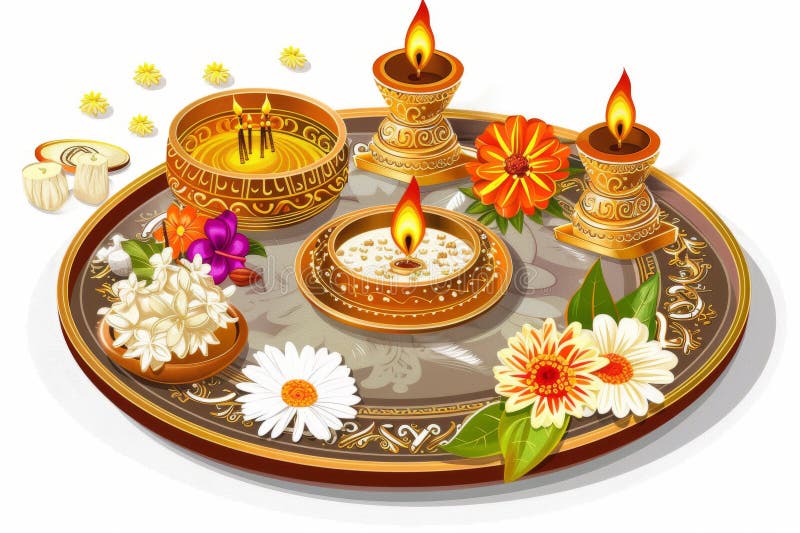
A Grade 9 teacher used a diagram showing a Hindu altar with various items used in worship (a puja thali). Use it to answer questions a and b.
a) (i) Identify one item used in Hindu worship shown in the diagram. (1 mark)
(ii) Name one other item commonly used in Hindu worship that is not shown. (1 mark)
b) Explain three purposes of performing Puja (worship) in Hinduism. (6 marks)
Answer
a)(i) The diagram shows a puja thali with several lit oil lamps (diyas) and fresh flowers (marigolds, jasmine and daisies) arranged on a decorative tray — any one of these (a diya, the flowers, or the thali itself) is an acceptable identification. (ii) One other item commonly used in Hindu worship but not shown in this diagram: a bell (ghanta) — also acceptable: a deity's image or statue (murti), incense sticks (agarbatti), or a small vessel of sacred water. b) To express devotion and love for the divine, fostering a personal connection with God or a chosen deity; to seek blessings,…
Written answers can be worded differently: naQonda marks your own answer and explains it when you sign up free.
More Grade 9 HRE questions from this test
- In Hinduism, the ultimate reality, which is formless, infinite, and all-pervading, is known as:Question 1
- The individual soul or self, which is believed to be identical with Brahman, is called:Question 2
- The cycle of birth, death, and rebirth is known as:Question 3
- The concept of 'action' and its consequences, which determines one's future lives, is known as:Question 4
- The principle of righteous conduct, duty, and moral order in Hinduism is called:Question 5
- The ultimate goal of Hindu life, which is liberation from the cycle of Samsara, is called:Question 6