CBC Grade 9 KJSEA Agriculture Practice Exam · Question 35
The table shows different farming practices and their impact on soil conservation. Based on the table, identify the most sustainable farming practice and…
From Test 27 — Agriculture and Nutrition KJSEA 906/1 Paper 1 (Theory) · 2 marks · Topic: Conservation of Resources, Soil Conservation and Erosion Control
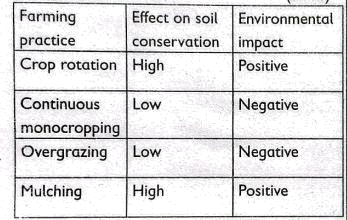
The table shows different farming practices and their impact on soil conservation. Based on the table, identify the most sustainable farming practice and explain why it is considered sustainable. (2 marks)
Answer
Crop rotation is the most sustainable practice, because the table rates its effect on soil conservation as High and its environmental impact as Positive — it maintains soil health by alternating crops, reduces pest build-up and lowers the risk of erosion. (Mulching is equally valid, since the table rates it High/Positive too — it protects the soil surface, conserves moisture and adds organic matter as it breaks down.)
The table rates crop rotation and mulching both 'High' for soil conservation and 'Positive' for environmental impact — a genuine tie in the source table — so either is accepted here provided the reasoning correctly reflects the table.
Written answers can be worded differently: naQonda marks your own answer and explains it when you sign up free.
More Grade 9 Agriculture questions from this test
- John described to his parents how to prepare soil tilth for various planting materials. (a) What is soil tilth? (1 mark)Question 36
- (b) What crops can be established in a fine soil tilth? (1 mark)Question 37
- David is learning about how to prepare eggs. What is the importance of preparing eggs (e.g. cleaning and grading)…Question 38
- The picture below is a kitchen garden. Fatimah is learning about the advantages of kitchen gardening. Mention two…Question 39
- Maria is cooking a healthy meal for her family. Why is it important to preserve food nutrients during cooking, and…Question 40
- Study the stitches shown below. Give the name of stitch A. (1 mark)Question 41